

Critical application warning
S.E.A.L. is a specialist product for slow-rotation, heavy-duty tyres only. Read this before use.
-
Suitable for
- Agriculture, Forestry, Construction, Municipal, Leisure, Golfing, and Road Freight.
- Applications where rotation speed and duty match heavy-duty sealant use
-
Not suitable for
- Passenger cars, SUVs, and high-speed bakkies
- Any high-speed road use outside approved heavy-duty applications
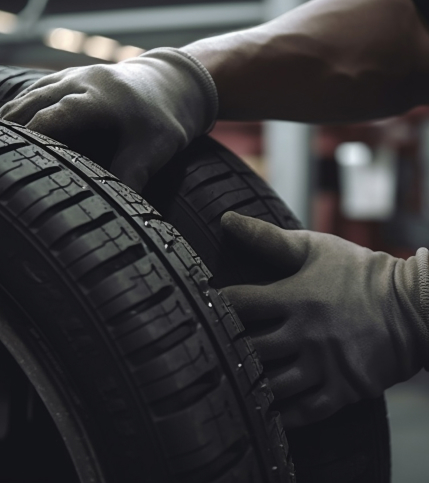
In the demanding South African environment, a tyre failure is not only costly—it is a safety risk when you are far from support. Correct pressure for load and heat remains the first priority; S.E.A.L. is built for operations that already take tyre care seriously.
Sealants have existed for years, but many struggle in real field conditions. S.E.A.L. is formulated for grit, heat, and heavy loads in industrial and agricultural use. It targets most tread-area punctures you are likely to see in service.
No product seals every failure. Where damage is severe, S.E.A.L. still works to slow air loss so you are less likely to suffer a sudden, dramatic blowout.
Key benefits
- Heat and pressure: Helps limit heat buildup linked to under-inflation and overloading—heat is rubber’s main enemy. Supporting stable pressure and cooler running often extends natural tyre life by around 15% or more where maintenance is already sound.
- Casing integrity: Reduces porosity, air migration, and seepage so plies stay protected—supporting more retread cycles and longer casing life.
- Puncture recovery: Automatically seals many tread-area punctures in normal use (see technical summary for size and guarantee scope).
- Blowout mitigation: When damage is too extensive to seal, the formulation is designed to allow a controlled, slower loss of air rather than an instant failure.
- Rim protection: Corrosion inhibitors help protect steel and alloy rims in the wheel cavity.
- Operating economics: Less downtime from preventable flats, more predictable running, and better use of each casing supports productivity and cost control.
How S.E.A.L. supports maintenance
The points below expand on everyday handling: removal for retread, rim care, and why holding pressure matters in the field.
-

Retread and repair workflow
Because S.E.A.L. is water-soluble, it rinses away when tyres are prepared for retreading or repair—no need to fight cured residue inside the cavity. Always install at full concentrate; never dilute with water during filling.
-

Inside the rim cavity
Inhibitors in the formula are there to limit rust and scale on steel and alloy rims where moisture and harsh conditions accelerate corrosion. It complements—not replaces—sound rim inspection.
-

Pressure in the field
Running soft generates heat and softens tread rubber, which invites punctures and casing damage. S.E.A.L. backs your pressure maintenance so the tyre spends more time in its safe operating window.
Technical summary
For formulas, quantities, and full specification data, see the Specifications page.
- Durability in tyre Active for the legal life of the tyre when used as directed; the product does not dry up in normal service.
- Appearance Viscous green fibre and filler mixture in colloidal suspension.
- Shelf life 2 years when stored in a cool place.
- Puncture and porosity scope Designed to seal porosity, air migration, and tread-area punctures up to 8 mm for that service life. If the casing is unsafe, the formulation is intended to slow-bleed rather than mask a critical failure.
- Maintenance / retread Water-soluble—rinses out for retreading or repair when procedures are followed.
- Installation strength Must be used at full concentrate. Do not dilute with water when installing.
- Rims and materials Formulated not to rust or corrode approved steel and alloy heavy-duty rims when used as directed; compatible with normal heavy-duty tyre materials under approved use.
Installation guide
Follow these steps in order. S.E.A.L. fits standard workshop practice. For material safety, spillage, and compliance detail, see Safety and compliance on the Features & Benefits page.
Safety first
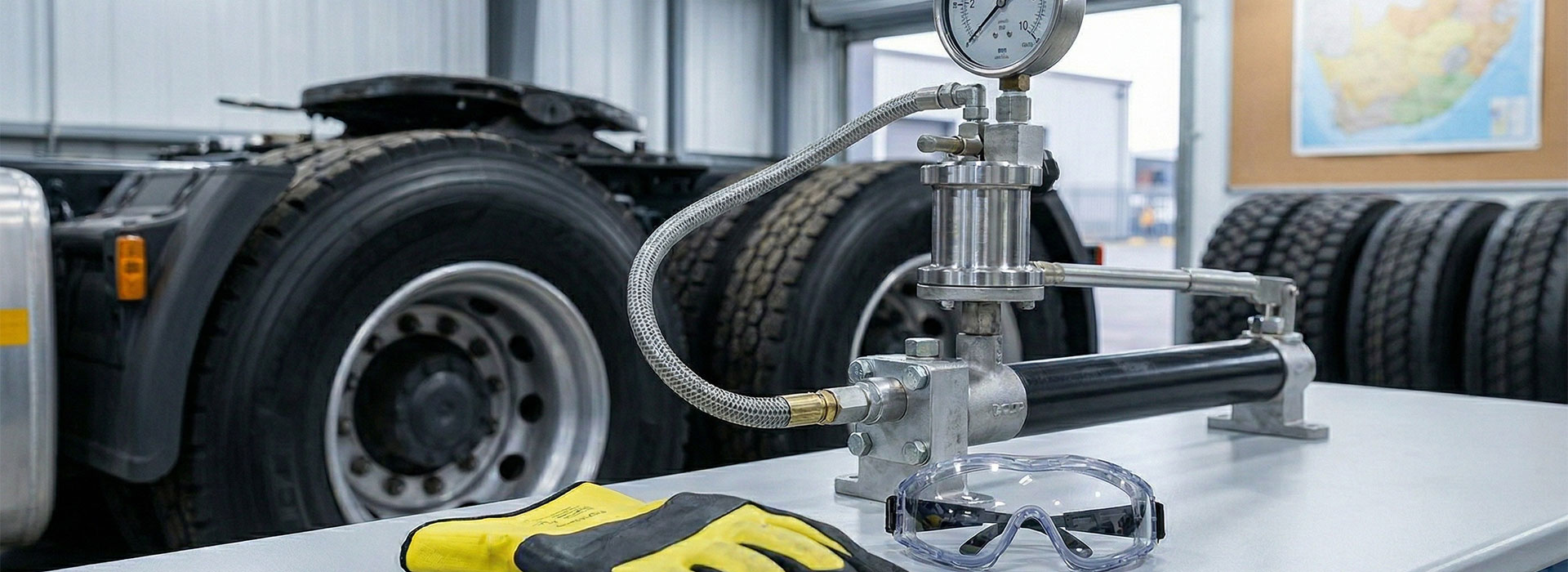
- Wear goggles and gloves before opening or handling sealant.
- CAUTION: Pressurized Application System – Use Safety Precautions
Preparation
- Clean tools and keep the injector pump maintained so water or debris is not forced into the tyre.
- Calculate the volume per tyre from tyre size (use the Specifications page calculator and guidance).
- Have the correct applicator or split-bead approach ready before opening the drum.
- Ensure the tyre is free of excess talcum powder, water, and foreign material before installation.
- Mix the sealant vigorously immediately before use.
Application
- Method A: Remove the valve core and use a pressurised applicator cylinder (e.g. 10 litre 6 bar steel unit) to inject the measured volume through the valve stem.
- Method B: Split the bead from the rim by about 20 cm at a safe point, pour the required amount into the cavity, then re-seat the tyre.
- Use only the calculated amount—do not dilute with water.
Completion & distribution
- Clean the work area, rim, and tyre surfaces.
- Reinstall the valve core if removed, then inflate to the correct operating pressure.
- Drive approximately 3 km so the sealant coats the interior evenly.
Monitoring
- Keep regular pressure checks as part of your normal safety routine—sealant supports good maintenance; it does not replace it.
Clean-up
- Rinse tools with water promptly after use.
- If sealant splashes on skin or clothing, wash thoroughly.
- Any sealant on the ground must be covered with sand (or similar) to protect wildlife—see Safety and compliance.
Why S.E.A.L. for South African conditions
Most sealants are not tested against the combination of heat, dust, distance from support, and heavy-duty duty cycles common here. S.E.A.L. is aimed at agriculture, forestry, construction, municipal fleets, leisure and golfing use, and road freight—where uptime and predictable behaviour after damage matter.
S.E.A.L. fixes most punctures without you knowing

S.E.A.L. delivers heavy-duty tyre sealant solutions for agricultural and industrial operations that depend on uptime, safety, and long tyre life.